

Emsella® for pelvic strength

EMSELLA® Pelvic Floor Support During Weight Loss
Lose Weight Without Overlooking Your Pelvic Health
Weight loss can improve blood sugar, mobility, energy, joint health, and overall well-being. It can also reduce the pressure placed on the bladder and pelvic floor.
But the number on the scale is only one part of the transformation.
As the body changes—particularly during rapid or medication-supported weight loss—muscle health, bowel function, core stability, hydration, nutrition, and pelvic-floor strength deserve attention. Some patients become more aware of leakage, urgency, pelvic weakness, or reduced support that may have been present before weight loss or may become more noticeable as their body composition changes.
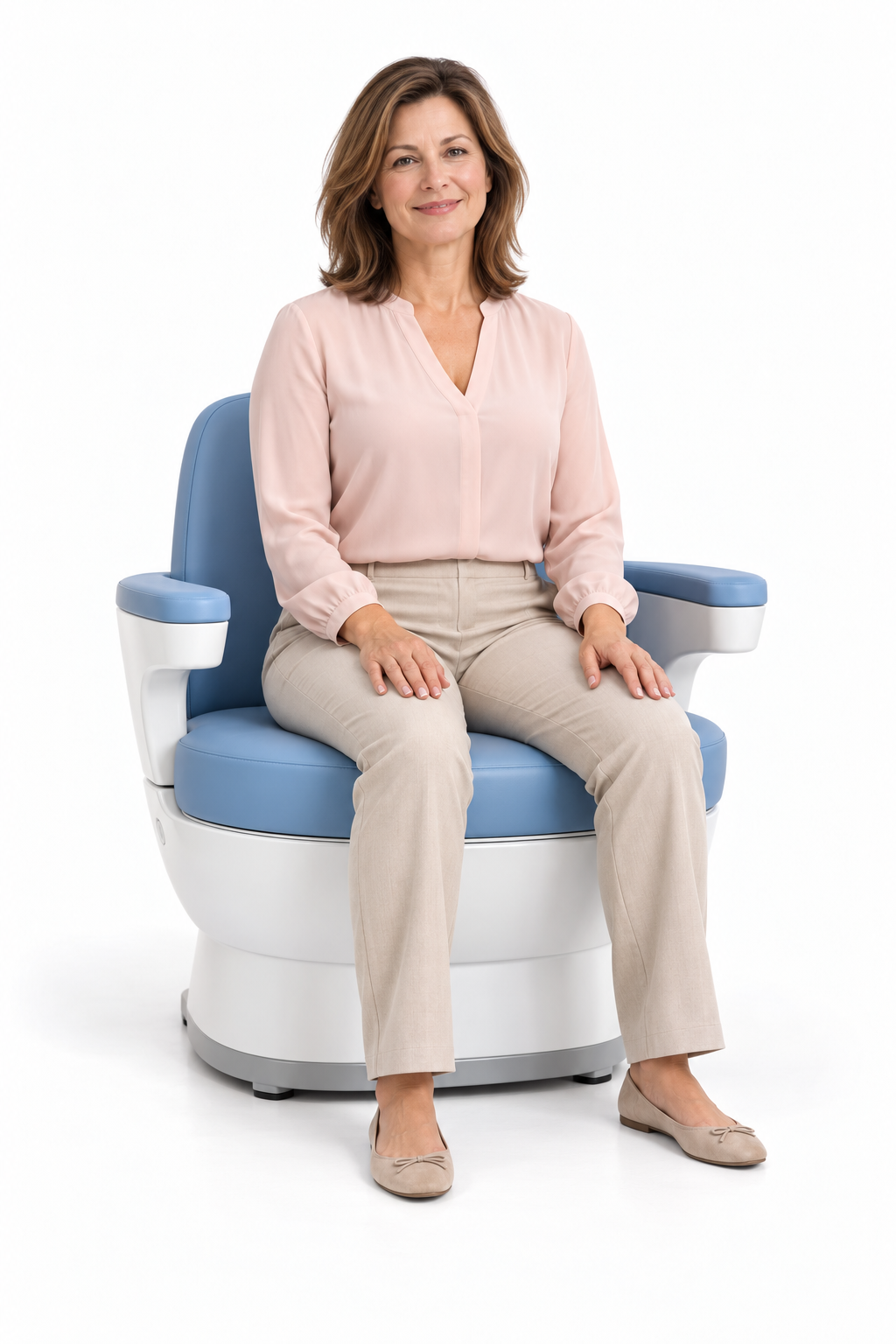
EMSELLA® is a noninvasive treatment that stimulates and strengthens weak pelvic-floor muscles. It may be incorporated into a physician-directed weight-management program to support bladder control, pelvic strength, and confidence throughout the weight-loss journey.
Weight and the Pelvic Floor Are Connected
The pelvic floor forms the muscular base of the pelvis. It helps support the bladder, uterus, rectum, and other pelvic structures while contributing to urinary control, bowel control, and sexual function.
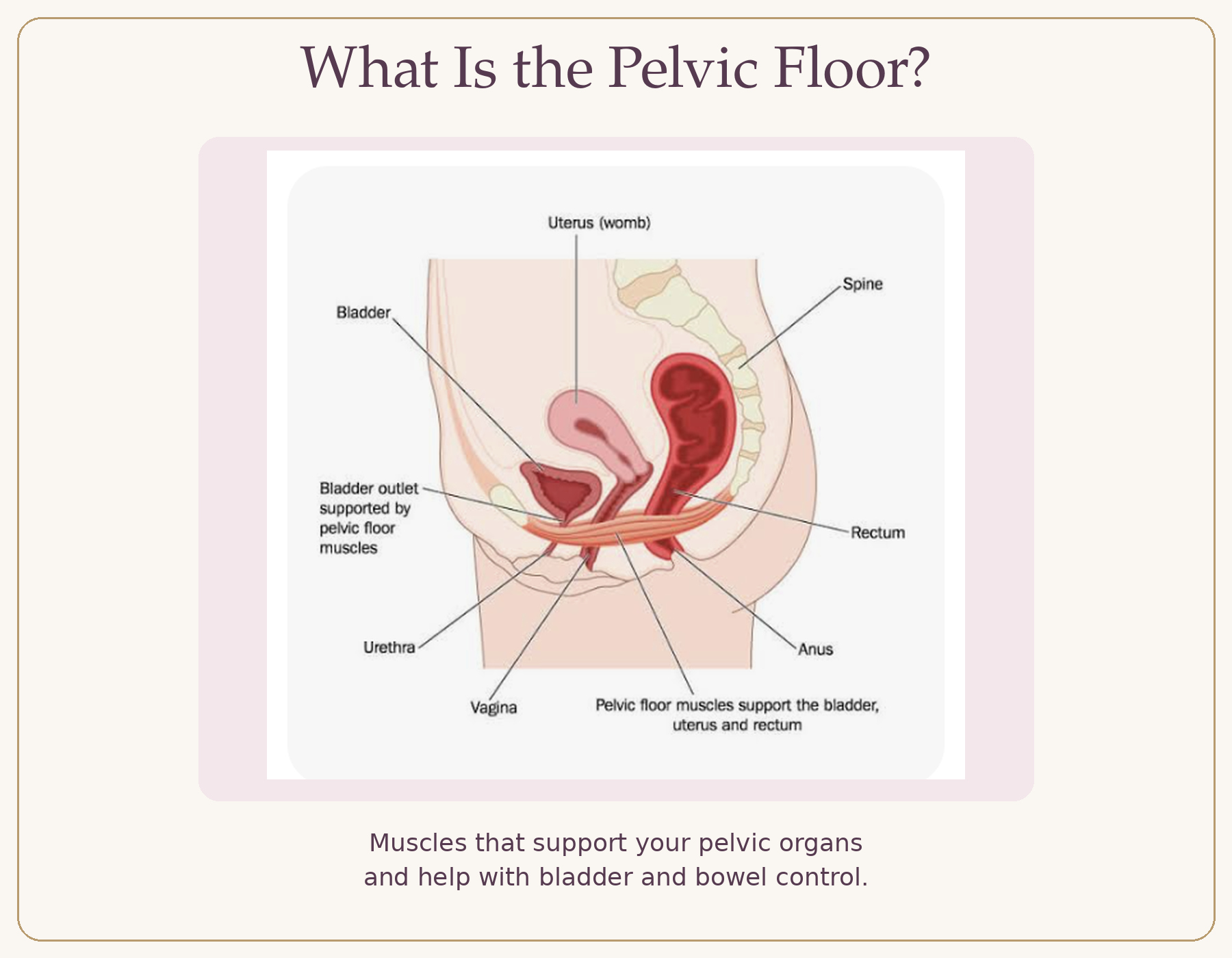
Carrying excess weight can increase pressure within the abdomen and place additional demand on the pelvic-floor muscles and the tissues supporting the bladder and urethra. Overweight and obesity are recognized, modifiable risk factors for urinary incontinence, particularly in women.
Pelvic-floor symptoms associated with excess weight may include:
Leakage with coughing, sneezing, laughing, or exercise
A sudden urge to urinate
Difficulty reaching the bathroom in time
Increased urinary frequency
Pelvic pressure or heaviness
Reduced confidence during movement or exercise
Bowel-control concerns
Difficulty correctly activating the pelvic-floor muscles
These symptoms should be evaluated rather than automatically attributed to weight alone.
Support Where It Matters



Weight Loss Often Improves Urinary Leakage
Weight loss is generally beneficial for bladder health.
In a randomized clinical trial involving 338 overweight or obese women with urinary incontinence, an intensive six-month weight-loss program produced a greater reduction in weekly incontinence episodes than a structured education program. The study supports weight reduction as an important treatment strategy for urinary leakage in appropriate patients.
The National Institute of Diabetes and Digestive and Kidney Diseases also advises that losing weight may improve urinary incontinence and that maintaining a healthy weight may help prevent bladder-control problems.
EMSELLA® provides additional muscle support for patients who already have weakness, leakage, or difficulty activating the pelvic floor while they work toward a healthier weight.
Why Pelvic Symptoms May Still Need Attention During Weight Loss
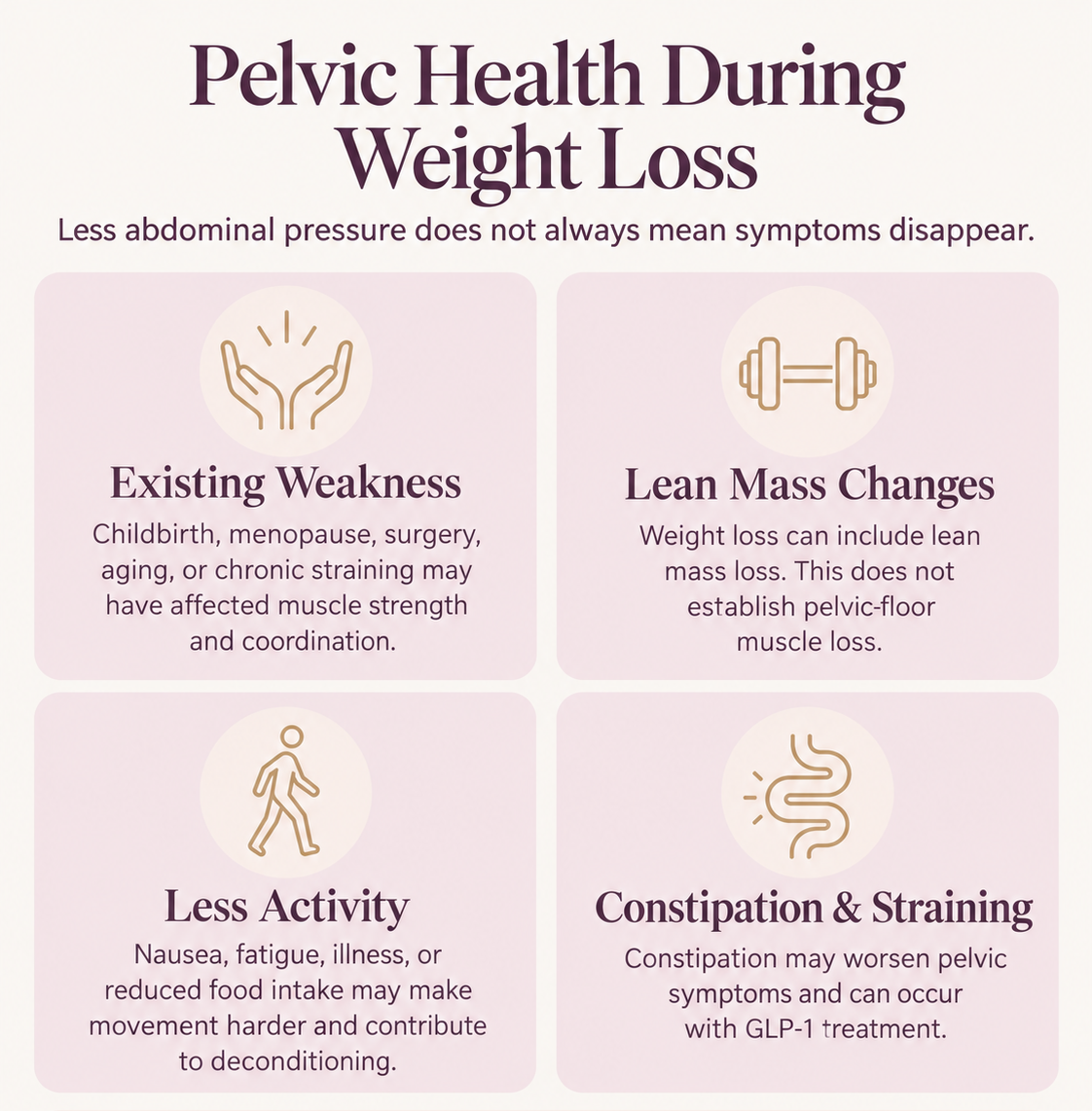
Even when weight reduction decreases abdominal pressure, pelvic symptoms may not disappear completely.
Several factors may influence how the pelvic floor functions during a significant body-composition change. During weight loss, inadequate protein or overly restrictive calorie intake—especially alongside reduced activity and insufficient strength training—can contribute to muscle loss and reduced strength.
Because the pelvic floor is also muscular, maintaining its function deserves attention, although weight-loss-related muscle loss has not been established specifically in this area.
How EMSELLA® May Support a Weight-Management Program
EMSELLA® may be considered to help:
Strengthen weak pelvic-floor muscles
Improve awareness and activation of the pelvic floor
Reduce selected episodes of urinary leakage
Support return to walking, running, or exercise
Improve confidence during coughing, sneezing, lifting, or jumping
Address weakness that remains as body weight decreases
Complement core-strengthening treatment
Support pelvic health during the transition from active weight loss to maintenance
Strong pelvic-floor muscles provide better support for bladder control than weak muscles. Pelvic-floor muscle training is an established conservative treatment for urinary incontinence.
EMSELLA® may be one option for stimulating these muscles, particularly for patients who have difficulty identifying or consistently contracting them voluntarily.
Part of your personalized plan.

Protecting your strength means also paying attention to muscles you can’t see.
Dr. Eakin’s Look Deeper Method™ considers nutrition, strength, sympotms, and your individual needs.
Adequate nutrition Support your overall health and muscle mass
Pelvic floor assessment We discuss your symptoms, goals and options
Target support EMSELLA® when appropriate as well as other pelvic/bladder health supppport
FREQUENTLY ASKED QUESTIONS
-
-
-
-
Treatment may not be appropriate during pregnancy or for patients with certain electronic or metal implants, active infection, recent surgery, unexplained bleeding, significant urinary retention, or another medical contraindication.
A complete medical and device-safety screening is performed before treatment.
Weight Loss Should Help You Move Forward—Not Hold You Back
A successful weight-management program should support more than a lower number on the scale.
It should help you feel stronger, move more confidently, preserve your independence, and participate in activities without fear of bladder leakage.
EMSELLA® may provide targeted pelvic-floor support while medical weight management, nutrition, resistance exercise, bowel health, and core conditioning address the rest of the journey.