
Kybella®

Refine the Area Beneath Your Chin—Without Surgery
Fullness beneath the chin can soften the jawline and affect the way your face looks from the front and side. It may be influenced by genetics, aging, or weight changes—and it does not always improve with diet and exercise.
Kybella® is an FDA-approved injectable treatment designed to reduce moderate to severe fat beneath the chin. Treatment is personalized to your anatomy, degree of fullness, skin quality, and desired profile.
What Is Kybella®?
Kybella® is a prescription injectable medication containing synthetic deoxycholic acid. Deoxycholic acid is similar to a substance naturally found in the body that assists with the breakdown and absorption of dietary fat.
When Kybella® is injected into submental fat—the fat beneath the chin—it disrupts the membranes of the treated fat cells. The damaged cells are then gradually cleared by the body. Once destroyed, those particular fat cells can no longer store or accumulate fat.

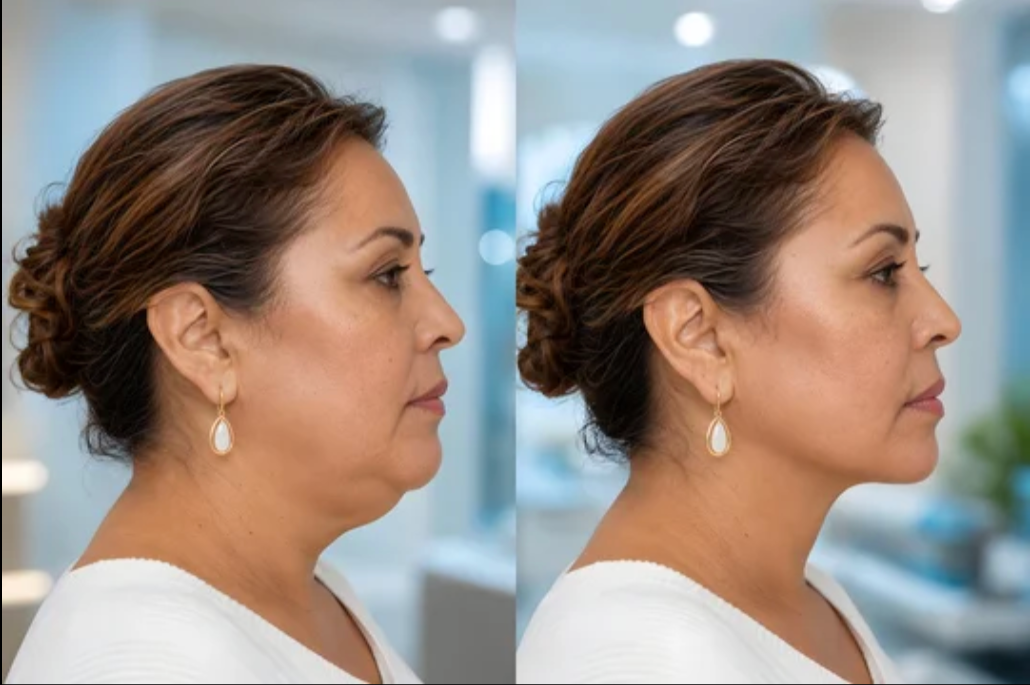
Kybella® is FDA approved for improving the appearance of moderate to severe fullness associated with fat beneath the chin in adults. Its safe and effective use for fat outside the submental area has not been established and is not recommended in the prescribing information.
What Can Kybella® Improve?
Kybella® may be appropriate when the area beneath your chin appears:
Full or rounded
Disproportionate to the rest of your face
Resistant to weight loss
Less defined when viewed from the side
Responsible for obscuring your natural chin or jawline
The goal is not necessarily to remove every trace of softness. It is to create a more balanced transition between the chin, neck, and jawline.
Is the Fullness Caused by Fat?
Not every “double chin” is primarily caused by excess fat.
The appearance of fullness beneath the chin may also be influenced by:
Loose or crepey skin
Prominent platysmal neck bands
A small or recessed chin
The natural position of the hyoid bone
Salivary glands or other underlying structures
Previous surgery, liposuction, filler, or energy-based treatments
A combination of fat, skin laxity, and facial structure
The Kybella® prescribing information specifically advises clinicians to evaluate other possible causes of submental fullness and to use careful judgment when significant skin laxity or prominent platysmal bands are present. Removing fat without addressing these factors could produce an unsatisfactory result.
This is why an in-person physician assessment is an essential part of treatment planning.
Who Is a Good Candidate?
Kybella® may be considered for adults who:
Have a noticeable pocket of fat beneath the chin
Prefer a nonsurgical treatment
Have enough pinchable submental fat to treat safely
Understand that multiple appointments may be needed
Can accommodate temporary swelling after treatment
Have realistic expectations about the degree and timing of improvement
Patients with substantial loose skin, very little treatable fat, significant neck-band prominence, or fullness caused mainly by skeletal anatomy may benefit more from another treatment or a combination plan.
What to Expect During Treatment
Before treatment, Dr. Eakin will assess your chin, jawline, neck anatomy, skin quality, and the distribution of fat beneath the chin.
The treatment area is outlined, and a temporary grid may be used to guide precise placement. Kybella® is then administered through a series of small injections into the subcutaneous fat.
The number of injections depends on the size and shape of the treatment area. The FDA-approved protocol permits up to 50 individual injections during one treatment session, although your treatment may require fewer.
You may feel brief pinching, burning, pressure, or stinging during the injections. Comfort measures such as ice, topical anesthetic, or local anesthetic may be used when appropriate.
Swelling Is Expected
Swelling is not unusual after Kybella®—it is part of the inflammatory response that occurs as the treated fat cells are disrupted and cleared.
The area beneath the chin may temporarily appear larger before it looks smaller. Swelling is often most noticeable after the first treatment and may be accompanied by:
Tenderness or soreness
Redness
Bruising
Numbness
Firmness or hardness
A feeling of fullness beneath the chin
Swelling, bruising, pain, numbness, redness, and firmness were among the most frequently reported reactions in clinical studies.
Patients should plan treatment around work, travel, photography, and important social events rather than assuming the area will be inconspicuous the following day.
How Many Treatments Will I Need?
Kybella® is usually planned as a series rather than a single appointment.
Up to six treatment sessions may be administered, with treatments scheduled at least one month apart. Many patients in clinical studies experienced visible improvement after two to four sessions, but 59% of participants received all six treatments.
The number of treatments you need will depend on:
The amount and distribution of submental fat
The size of the treatment area
Your response to each session
The amount of change you would like to achieve
Your skin’s ability to adapt as the volume decreases
Your progress will be reassessed before each additional treatment. You do not automatically need all six sessions.
When Will I See Results?
Kybella® results develop gradually. The area must first recover from swelling and inflammation, and the body then needs time to clear the disrupted fat cells.
Improvement may become increasingly visible over the weeks following treatment. Clinical results were formally evaluated 12 weeks after the final treatment session, which reflects why the outcome should not be judged immediately after an injection appointment.
Photos taken from consistent front, side, and three-quarter angles can help document subtle changes in profile and contour.
Are the Results Permanent?
The fat cells destroyed by Kybella® can no longer store fat. However, the appearance of the chin and neck can still change with future weight fluctuations, aging, skin laxity, and changes in facial structure.
Maintaining a relatively stable weight and supporting skin quality can help preserve the overall contour.
The Total Illusion Difference
Kybella® requires more than identifying a pocket of fullness and placing a series of injections.
The submental area contains important nerves, muscles, blood vessels, glands, and other structures. Safe treatment depends on understanding this anatomy, selecting the correct treatment depth, and recognizing when the fullness is not primarily caused by fat. The FDA-approved labeling emphasizes that appropriate placement and knowledge of the anatomy are essential to safe and effective use.
At Total Illusion, Dr. Eakin evaluates:
The amount and location of treatable fat
Chin projection and facial proportions
Jawline definition
Skin laxity and collagen loss
Platysmal muscle activity
Previous treatments or surgery in the area
Your tolerance for swelling and treatment downtime
Whether Kybella is likely to provide the result you want
Your plan may include Kybella® alone or a carefully sequenced combination of collagen stimulation, skin tightening, chin enhancement, or other facial-contouring treatments when appropriate.
The goal is not simply a smaller area beneath the chin. It is a profile that looks balanced with the rest of your face.
A More Defined Profile Starts With the Right Assessment
Fullness beneath the chin is not always about weight, and it is not always caused by fat alone. A careful evaluation helps determine whether Kybella® is the right treatment—or whether another approach would better support your facial structure and goals.
Schedule a Kybella® Chin-Contouring Consultation
FREQUENTLY ASKED QUESTIONS
-
No. Kybella® is a localized contouring treatment for moderate to severe fat beneath the chin. It is not intended to produce overall weight loss or treat widespread facial or body fat. Its safe and effective use outside the submental region has not been established.
-
Kybella® is designed to reduce fat, not directly tighten skin.
Some patients may appreciate the appearance of their skin after the underlying fullness is reduced, while others may notice that existing laxity is more visible. Significant loose skin may require a different treatment strategy.
-
The FDA-approved indication is limited to fat beneath the chin. The prescribing information states that safe and effective use in other areas has not been established and is not recommended.
-
Previous surgery or aesthetic treatment does not automatically exclude you, but it may alter the anatomy, create scar tissue, or affect the expected result.
The prescribing information recommends caution in patients who have had prior surgical or aesthetic treatment in the submental area.
-
Kybella destroys cells where it is injected. It must be placed within the appropriate fat layer and away from nearby nerves, muscles, glands, blood vessels, and other vulnerable structures.
Improper placement may increase the risk of nerve injury, tissue damage, skin ulceration, necrosis, or other complications.
-
Potential serious risks include:
Injury to the marginal mandibular nerve, which may produce an uneven smile or facial weakness
Difficulty swallowing
Damage to a blood vessel
Skin ulceration or tissue necrosis
Infection
Hair loss at the injection site
In clinical trials, reported marginal mandibular nerve injuries and difficulty swallowing resolved, but the duration varied. Patients should promptly contact their treating physician if they develop facial weakness, an uneven smile, difficulty swallowing, increasing redness, drainage, open sores, or worsening pain.
-
Kybella® should not be injected when an infection is present at the treatment site.
Tell Dr. Eakin before treatment if you:
Have current or previous difficulty swallowing
Have bleeding problems
Take anticoagulant or antiplatelet medication
Have had surgery or cosmetic procedures involving your chin, face, or neck
Have a medical condition affecting the neck area
Are pregnant, planning pregnancy, breastfeeding, or planning to breastfeed
The effects during pregnancy and breastfeeding have not been fully established.
-
Many patients continue routine activities, but the visible swelling can be significant—particularly after an initial treatment.
It is best to schedule the procedure when you can comfortably accommodate several days of swelling and avoid important events until you know how your body responds