Red Light Therapy
Light that supports cellular activity -
without heat or UV.
Safe • Precise • No Downtime
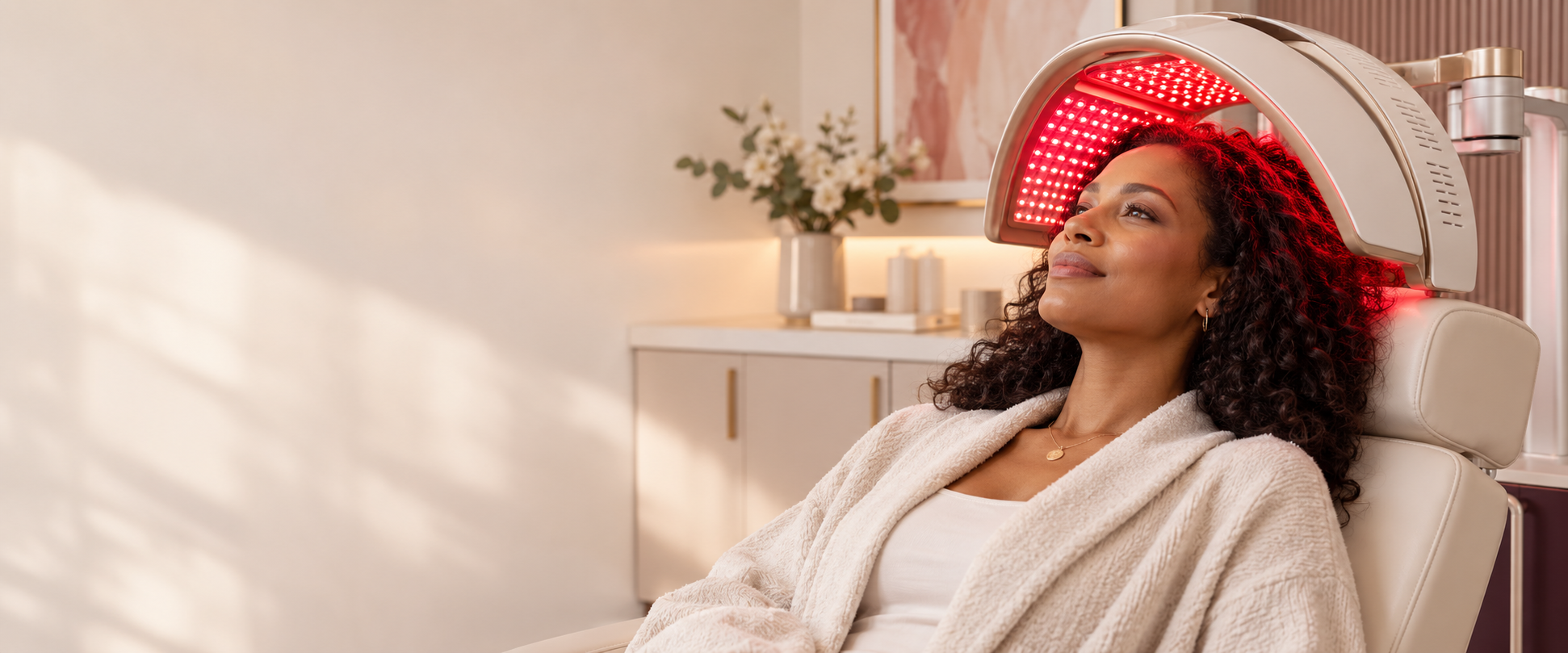
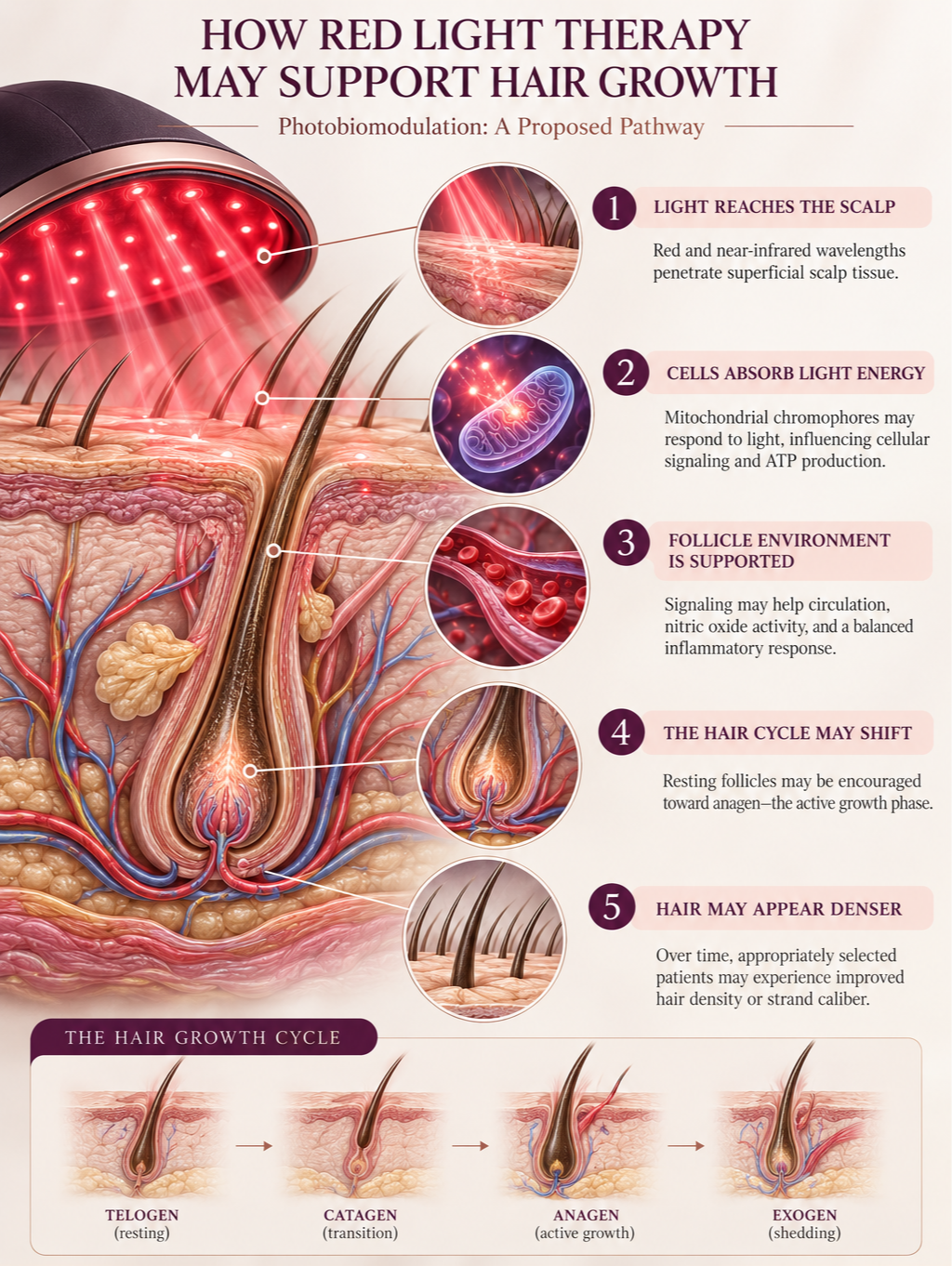
Red-light therapy for hair is also called low-level light therapy, low-level laser therapy or
photobiomodulation. Appropriate devices deliver controlled red or near-infrared wavelengths to the scalp.
01 Light reaches
the scalp
Low-intensity light is
delivered without cutting,
injections or intentional
thermal damage.
02 Cells absorb
light energy
Photobiomodulation is
proposed to influence
mitochondrial signaling and
cellular energy pathways.
03 Follicles may be
supported
The goal is to support viable
follicles, encourage anagen
activity and improve the
scalp environment.
Important: The precise mechanism in human hair follicles remains under investigation. Outcomes depend on the condition being treated and the specifications of the device.
Photobiomodulation to support hair growth.
Using specific wavelengths of red and near-infrared light to support activity within the hair follicle.
When this light reaches the scalp, it may influence mitochondrial signaling—the process cells use to produce energy and coordinate repair. This response may help:
Support cellular energy production
Promote healthy circulation around the follicle
Encourage a balanced inflammatory response
Support the transition of resting follicles into the active growth phase
Improve hair density or strand caliber over time
Clinical evidence is strongest for androgenetic alopecia, commonly known as female- or male-pattern hair loss. Red light therapy may be used to support other types of hair loss as well by helping to improve scalp health and promoting healthy circulation.
FREQUENTLY ASKED QUESTIONS
The right light starts with the right diagnosis.
-
No. Appropriate hair-growth photobiomodulation uses low-intensity visible red light and, in some systems, near-infrared wavelengths. It does not intentionally heat the scalp and is not ultraviolet tanning light.
-
Combination treatment may be appropriate for some patients. The decision should reflect diagnosis, tolerance, goals and the evidence supporting each component.
-
No. Wavelength, energy output, dosing, coverage, device design and regulatory status vary. Evidence for one device cannot automatically validate another.
-
Studies commonly assess outcomes after approximately four to six months. Continued treatment may be needed to maintain benefit, and individual timing varies.
-
In general, we start off with 12-weekly sessions followed by once monthly maintenance sessions.
-
Treatments are 30 minutes.
-
It is best if you come to the appointment with clean hair (not wet) free of styling products.
-
No. Response depends on diagnosis, duration of loss, follicle viability, device parameters, consistency and individual biology.
Red light therapy may support hair density and follicular activity in appropriately selected patients, particularly those with pattern hair loss. Because hair shedding can have nutritional, hormonal, inflammatory, medication-related, or systemic causes, we recommend a thorough evaluation before incorporating photobiomodulation into a personalized restoration plan.