
Balance and Longevity: What a 10-Second Test Reveals About Your Health
When most people think about health and aging, they focus on lab results, heart rate, or cholesterol. But one of the most powerful indicators of how long — and how well — you’ll live requires no blood test, no fancy equipment, and only takes 10 seconds.
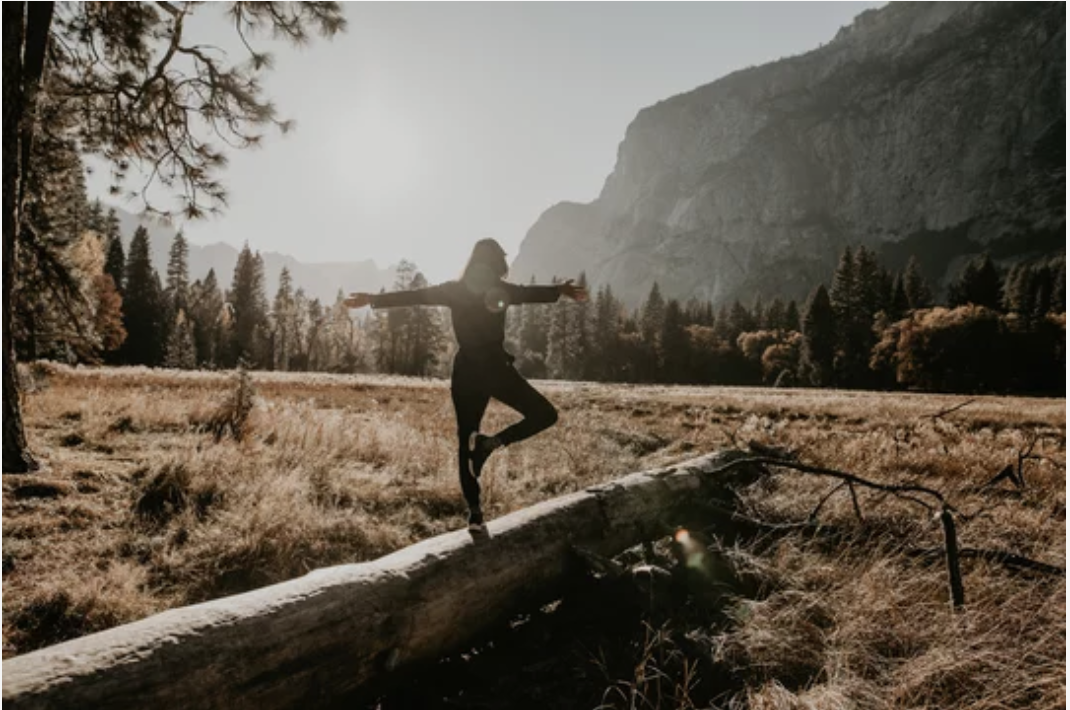
It’s your ability to stand on one foot.
Surprising? Maybe. But growing research shows that balance — something we take for granted in youth — becomes a vital sign of brain health, muscle integrity, and overall longevity.
🧠 Balance Is Brain–Body Communication
Standing on one leg may seem simple, but it’s actually a full-body, brain-driven exercise. It requires:
Sensory input from your eyes, ears, and joints,
Instant processing in the cerebellum and motor cortex,
Muscle coordination between your core, glutes, and legs, and
Stabilization from your vestibular (inner ear) system.
When we lose balance, it’s often not just the legs getting weaker — it’s the communication between brain and body becoming less efficient. In other words, balance is the ultimate reflection of how well your nervous and musculoskeletal systems are working together.
🧬 The 10-Second Test That Predicts Survival
A landmark 2022 study in the British Journal of Sports Medicine followed 1,700 adults aged 51–75 for over a decade. Participants were asked to stand on one leg for 10 seconds.
Those who couldn’t hold the position were 84% more likely to die from any cause over the next 10 years — even after adjusting for age, weight, and chronic conditions.
The study confirmed what geriatric and movement scientists have long suspected: balance predicts longevity as strongly as traditional markers like blood pressure or glucose control.
💪 Why Balance and Longevity Are Linked
1. Muscle Mass and Strength
Good balance depends on core, gluteal, and leg muscles. These same muscles protect your joints, spine, and organs. As muscle declines with age (a process called sarcopenia), so does balance — and that loss directly increases risk for falls, fractures, and disability.
Muscle and balance are inseparable; both are foundational to independence and survival.
2. Brain Health and Neuroplasticity
Balance training stimulates the cerebellum, vestibular system, and frontal cortex — areas tied to coordination, focus, and memory. Declining balance may signal early changes in cognitive processing or neurodegeneration. Practicing balance retrains the brain’s plasticity, keeping neural circuits young and adaptive.
3. Vestibular and Proprioceptive Function
The inner ear and proprioceptors (sensors in your joints and muscles) constantly send information to the brain about where you are in space. When these systems weaken, the risk of falls — and subsequent decline — skyrockets. Improving balance strengthens these feedback loops, keeping the body’s “GPS” finely tuned.
4. Cardiovascular and Metabolic Health
People with good balance usually have better muscle tone, lower visceral fat, and healthier metabolism. Conversely, poor balance often correlates with inflammation, insulin resistance, and reduced aerobic capacity — all drivers of premature aging.
🩺 Falls and the “Downward Spiral” of Aging
Falls are the second leading cause of accidental death globally, according to the World Health Organization. But even non-fatal falls can initiate a downward spiral — reduced activity, muscle loss, fear of falling, social withdrawal, and further decline. Maintaining balance isn’t just about avoiding falls; it’s about preserving confidence, coordination, and quality of life.
🌿 How to Improve Balance — and Extend Longevity
1. Strengthen Core and Legs
Incorporate squats, lunges, and glute bridges.
Devices like HIFEM (High-Intensity Focused Electromagnetic) therapy can safely activate deep muscle fibers and core stabilizers.
2. Train the Brain with Movement
Practice single-leg balance, heel-to-toe walking, or standing on one foot while brushing your teeth.
Add “dual-task” training — like balancing while counting backwards — to engage both mind and body.
3. Move Mindfully
Yoga, Pilates, and Tai Chi improve proprioception and reduce stress.
Mind–body practices reinforce neural pathways that support balance and coordination.
4. Support the System
Optimize hormones (estrogen, testosterone, thyroid).
Ensure adequate vitamin D, magnesium, and omega-3s for neuromuscular function.
Get enough sleep — the brain consolidates motor memory during deep rest.
5. Sharpen the Brain
Optimize neuroplasiticy
Increase Brain Derived Neurotropic Factor (BDNF)
Improve brain health with Exomind
🧭 A New Vital Sign of Aging Gracefully
Doctors once relied solely on lab values to gauge health. Now, we’re realizing that functional markers — like grip strength, gait speed, and balance — often tell us more about how the body is really aging.
The beauty of the one-leg test? It’s free, quick, and measurable — a daily reminder that longevity is not only about years in life, but life in those years.
💡 If you can balance on one foot for 10 seconds or more, you’re likely biologically younger than your age.
If you can’t — the good news is, it’s trainable. Balance is not a fixed trait; it’s a skill that sharpens the body and the brain — and practicing it may quite literally help you live longer.