My favorite approaches to supporting facial renewal
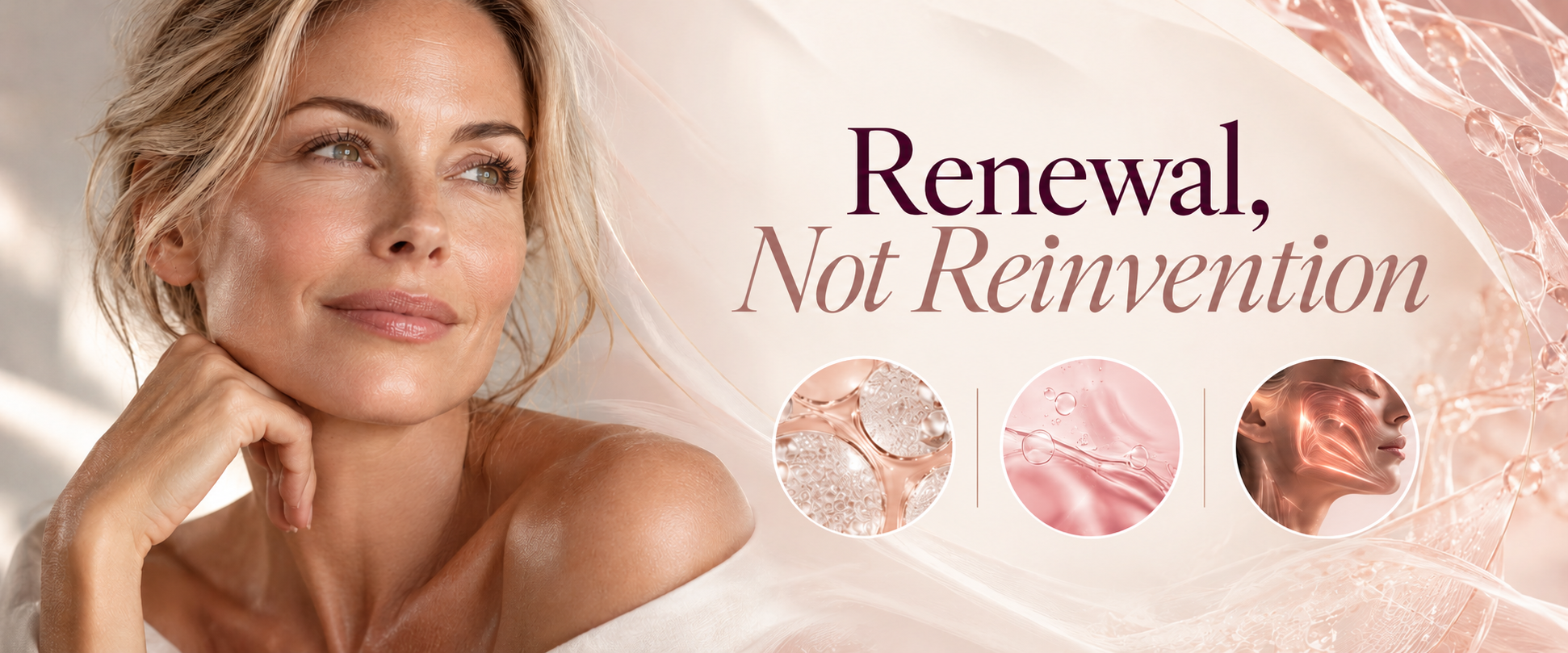
My top three favorite aesthetic treatments supporting renewal are Radiesse®, PRX-T33 and Emface®
Why? Because they represent something I believe is increasingly important in aesthetic medicine: working with the body's natural renewal processes rather than simply changing what we see on the surface.
For years, aesthetic medicine has focused heavily on filling wrinkles, relaxing facial muscles, and resurfacing the skin. Dermal fillers, neuromodulators such as Botox®, and technologies like CO2 lasers have certainly earned their place in aesthetic medicine. They remain valuable tools when used appropriately. But an increasingly important conversation in aesthetics is about something different.
What if, instead of focusing only on correcting the visible signs of aging, we also focused on improving the underlying quality and structure of the skin?
Getting to the root-cause. This is where regenerative aesthetics and biostimulation enter the conversation.
What Is Regenerative Aesthetics?
Regenerative aesthetics is an approach to aesthetic medicine that seeks to support the skin's natural processes of repair, renewal, and structural maintenance.
As we age, our skin undergoes biological changes. Collagen production declines, elastin fibers change, cellular activity slows, and the extracellular matrix—the structural framework supporting our skin—becomes less resilient.
These changes contribute to familiar concerns:
Fine lines and wrinkles
Skin laxity and loss of firmness
Crepey skin and changes in texture
Reduced elasticity
Loss of facial definition
Traditional aesthetic treatments may address individual manifestations of these changes. Regenerative aesthetics through biostimulatory treatments take a different approach by encouraging our body’s own processes involved in maintaining or improving skin structure.
The goal isn't necessarily to create more volume or dramatically change facial features.
It's to help the skin look healthier, firmer, and more resilient while preserving what makes you look like you.
Top Three approaches to supporting facial renewal
1. Radiesse® — Rebuilding the framework Focus: Dermal structure, firmness, elasticity, and contour.

Radiesse® is more than a dermal filler. It is one of my favorite injectable treatments because it offers something beyond traditional volume correction.
It contains calcium hydroxylapatite (CaHA) microspheres suspended in a gel carrier.
When injected appropriately, Radiesse can provide immediate structural support and volume correction. But what makes it particularly interesting is what happens afterward.
The CaHA microspheres interact with the surrounding tissue and stimulate fibroblasts—the cells responsible for producing collagen and other important components of the skin's extracellular matrix.
Studies have demonstrated that over time Radiesse® increases in collagen and elastin-related markers following treatment. This means Radiesse® can do more than simply occupy space beneath the skin. It can encourage biological changes associated with improved skin structure.
Depending on the formulation, treatment technique, and area being treated, Radiesse may be used to address wrinkles, restore contour, or improve the appearance of skin quality. I particularly love this product for its ability to address difficult areas such as the neck and decollete, improving the appearance of lines and decreasing the appearance of crepey skin. It is also particulary great at helping with acne scarring.
With Radiesse® you can appreciate the concept of biostimulation because the objective isn't always to add more filler.
Sometimes, the better approach is to support the skin's existing framework.
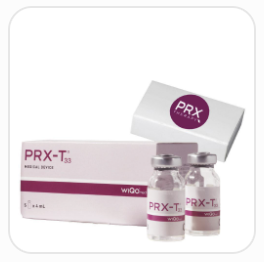
2. PRX-T33 — Revitalizing skin quality. Focus: Skin texture, smoothness, radiance, and superficial skin quality.
The second treatment I love is PRX-T33.
Although it is often discussed alongside biostimulatory treatments, PRX-T33 works differently from Radiesse®.
It is a topical skin treatment combining trichloroacetic acid (TCA), hydrogen peroxide, and kojic acid.
Unlike traditional chemical peels that rely on visible exfoliation, PRX-T33 is designed to promote skin revitalization with relatively little visible peeling in appropriately selected patients.
Its formulation is intended to encourage skin renewal and dermal remodeling while limiting some of the surface effects associated with conventional TCA peels.
Patients often seek PRX-T33 to improve the appearance of:
Dull or tired-looking skin
Uneven texture
Fine lines
Mild loss of firmness
Certain pigmentation concerns
What I particularly like about PRX-T33 is its focus on skin quality. Rather than trying to make the face look different, the goal is to help the skin itself look better. The skin looks brighter, feels tighter, and overall revitalized. I am also finding those who have regular maintenance treatments (generally, one every three months) tend to use less neurotoxin (wrinkle relaxers).
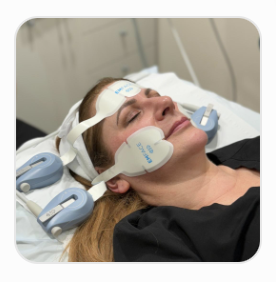
3. EMFACE® — Supporting the facial foundation . Focus: Muscle tone, facial support, wrinkles, and skin firmness.
When we think about facial aging, we often focus on wrinkles, collagen loss, and changes in skin elasticity. But the face is more than skin. Beneath the surface lies an intricate network of muscles, connective tissue, and fat compartments that work together to create facial expression, contour, and support. These structures also change as we age.
This is one reason EMFACE® has become one of my favorite technologies in aesthetic medicine.
Unlike injectable treatments, EMFACE® uses two technologies simultaneously:
Synchronized Radiofrequency (RF) delivers controlled heating to the skin and underlying tissues, encouraging collagen remodeling and improvements in skin firmness.
High-Intensity Facial Electrical Stimulation (HIFES) stimulates facial muscles through repeated contractions, with the goal of improving muscle tone and facial support.
Together, these technologies address two important components of facial appearance: the skin and the underlying facial musculature.
Early clinical studies have demonstrated improvements in wrinkle appearance, facial lifting measurements, and markers of collagen, elastin, and muscle quality.
What I find especially appealing is that EMFACE® does not rely on adding volume through injections or intentionally relaxing facial muscles. Instead, it works through controlled stimulation of the tissues that contribute to facial structure.
For patients who want a noninvasive approach to facial rejuvenation, EMFACE® may offer an attractive option. And when considered alongside treatments like Radiesse® and PRX-T33, it gives us the opportunity to think about facial aging more comprehensively.
Because beautiful, healthy-looking skin is only one part of the picture. The structures supporting that skin matter, too.
Does This Mean Fillers, Botox, and Lasers Are Becoming Obsolete?
Absolutely not.
I still believe these treatments have an important role in aesthetic medicine.
Neuromodulators can help address dynamic wrinkles caused by repeated muscle movement. Hyaluronic acid fillers can restore volume or improve facial proportions when appropriately used. CO2 lasers can be highly effective for certain textural changes and photoaging.
These treatments work through different mechanisms, and none is inherently superior for every patient.
What I find exciting is that we now have more opportunities to develop thoughtful treatment plans that address both the visible signs of aging and the underlying biology of the skin.
The future of aesthetic medicine, in my view, is not about choosing between traditional aesthetics and regenerative approaches.
It's about understanding when each approach is appropriate—and when less intervention may actually be better.
Healthy Aging Is About More Than Looking Younger
As a physician practicing integrative and aesthetic medicine, I see skin health as part of a much larger picture.
Hormonal changes, metabolic health, nutrition, sun exposure, sleep, inflammation, and lifestyle can all influence the way our skin ages. For women navigating perimenopause and menopause, changes in estrogen are particularly relevant because estrogen contributes to collagen maintenance, hydration, and skin function. This is why I believe aesthetic medicine should go beyond the surface.
A patient concerned about skin laxity may also be experiencing hormonal changes, rapid weight loss, or changes in muscle and body composition. Understanding these factors allows us to create a more individualized plan. No single aesthetic treatment can reverse biological aging, and stimulating collagen does not replace the importance of healthy lifestyle habits, appropriate skincare, and sun protection.
But carefully selected treatments can become part of a broader strategy for healthy aging.
Because the most beautiful results aren't always about changing how you look. Sometimes they're about helping your skin look and feel its best.
Dr. Desiree Eakin is a physician specializing in integrative wellness, metabolic and hormone health, and aesthetic medicine. Through her Look Deeper Method™, she emphasizes personalized care that considers both the visible concerns and the underlying factors influencing health, aging, and confidence.
Medical note: Radiesse is an injectable medical device with FDA-approved indications and important risks, including rare vascular complications. PRX-T33 is a topical treatment with different regulatory and safety considerations. Neither is appropriate for every patient. A medical consultation is necessary to determine suitability.